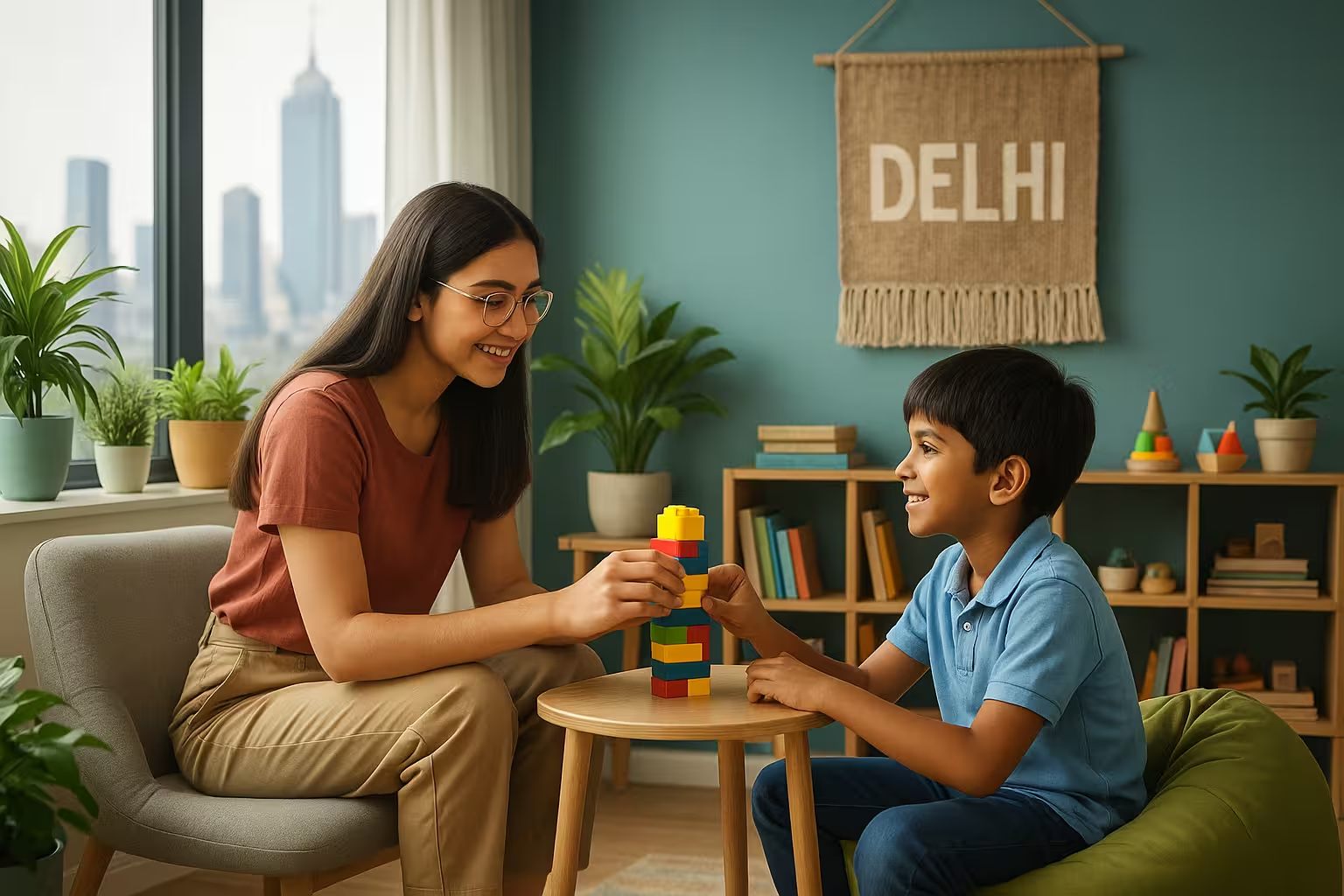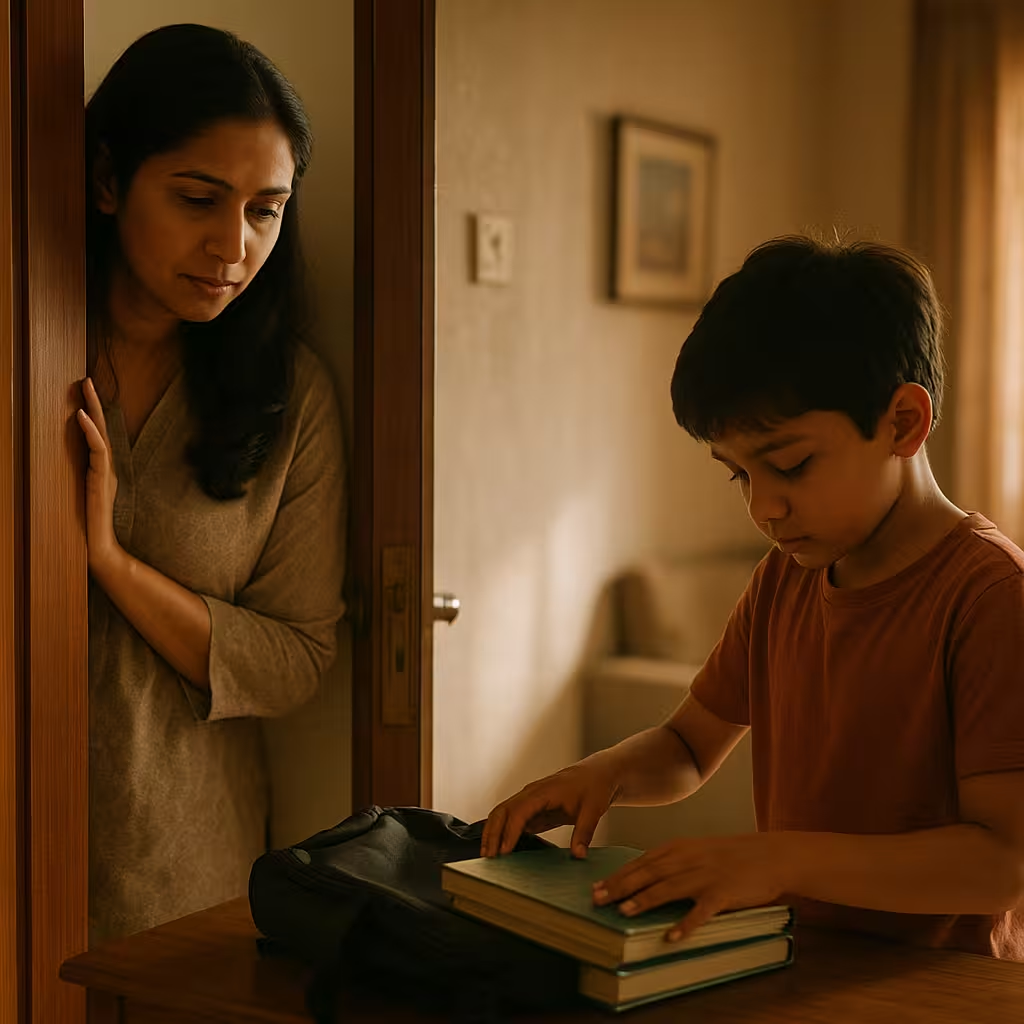
Mumbai parents often notice small signs before they realise something deeper is happening. A child washing hands many times after returning from school, checking their school bag again and again, arranging objects for long periods or repeating worries silently. These patterns can slowly take control of the child’s day. This is when child OCD counselling in Mumbai becomes important. At MyPsychologist, this online program is led by Mrs. Pratibha Gupta along with her trained team of child specialists. We operate online from Agra and support families across Mumbai with structured and child friendly sessions. Children from Andheri, Bandra and every part of Mumbai join our online sessions comfortably from home.
When a Small Worry Starts Feeling Too Big
Growing up in Mumbai brings energy and excitement but also strong routines, crowded spaces, school pressure and busy days. In this fast environment, a simple worry can grow faster. A child may fear that their hands are dirty after touching a desk at school. Another child may worry that their homework is wrong even after completing it correctly. These thoughts repeat and slowly become stronger. The child feels they must act to reduce the fear. This cycle can interfere with studies, sleep, play and confidence.
In our online child OCD counselling in Mumbai, we explain this cycle gently. Children learn that thoughts do not control them. They learn that fear reduces naturally even without rituals. Once a child understands this, they begin to feel safer inside their own mind. Families looking for support outside Mumbai can also explore child OCD counselling in Hyderabad for structured, child-friendly online sessions.
What Children in Mumbai Often Feel But Cannot Explain
Children usually feel their emotions strongly but do not know how to talk about them. They show patterns instead of words. Parents in Mumbai often notice changes but cannot always connect them to OCD. Therapy helps uncover the child’s inner world.
Emotional signs inside the child
- Fear that something bad will happen if they do not complete a ritual.
- Shame about unusual thoughts that they cannot stop.
- Guilt without any actual mistake.
- Frustration when the ritual interrupts their day.
Behaviour patterns seen in Mumbai homes and schools
- Checking school bag repeatedly before leaving for school.
- Washing hands too many times after touching common surfaces.
- Rearranging toys, books or school items for long durations.
- Avoiding benches, handles or desks in crowded areas of Mumbai.
Physical reactions the child experiences
- Tightness in the body or restlessness.
- Difficulty sleeping due to repeating thoughts.
- Headaches or stomach aches before school.
- Racing heart or fast breathing during fear moments.
These are often the first reasons parents connect with a child OCD specialist in Mumbai through our online platform for support.
The Behaviour Science Behind OCD
OCD is not a behaviour issue or stubbornness. It is a repeated inner pattern that forms inside the child’s system. A thought appears, the child feels a sudden wave of discomfort and a ritual brings temporary relief. This short-lived comfort teaches the inner system that the ritual is helpful, even when it is not. With time, the child begins to rely on this pattern again and again, turning it into a daily loop. Many children do not realise why this happens, and parents may struggle to understand the hidden cycle that is strengthening quietly in the background.
Inner processes also influence how strongly this loop grows. When these internal signals shift, the child may feel more fear or may feel a stronger urge to repeat certain actions. During child OCD counselling in Mumbai, we explain these ideas gently in simple language. Children learn that their inner system is not against them; it is simply following a learned cycle. With the right guidance and support, this cycle can slowly change into a calmer, healthier pattern that gives the child more control and confidence.
Different Faces of OCD Among Children in Mumbai
OCD looks different in every child. Understanding these types helps in creating a personalised therapy plan.
The checking type
- Child checks homework, zippers or locks again and again.
- Repeated doubt about small tasks.
- Constant reassurance seeking from parents.
The contamination type
- Fear of germs, dirt or illness.
- Avoiding school benches, train handles or public objects.
- Excessive hand washing at home and school.
The intrusive thought type
- Scary or unwanted thoughts appearing suddenly.
- Silent rituals like counting or repeating words.
- Fear of telling parents about the thoughts.
The perfection and arranging type
- Homework or drawing must be perfect or they restart.
- Toys or books must be arranged in a fixed pattern.
- Upset when someone changes the arrangement.
A trained child OCD expert in Mumbai identifies these patterns clearly during online assessment.
Why OCD Develops and Why It Gets Stronger
The reasons for OCD are layered and often build up quietly over time. They include the child’s personality, emotions and daily environment. Some internal processes also play a role in how worries grow and how certain patterns repeat. Together, these factors shape how strongly the cycle takes hold.
Internal factors
- Children who think deeply or feel strongly.
- Fear of mistakes or criticism.
- Sensitivity to uncertainty.
Mumbai lifestyle factors
- High academic pressure in Mumbai schools.
- Busy lifestyle with long travel times.
- Crowded public spaces creating sensory overload.
- Fast paced routines with little downtime.
Internal influence factors
- Changes in internal processes that influence mood and worry.
- Inner patterns that shape how habits form and repeat.
- Certain inner pathways becoming more reactive during stress.
This combination means child OCD counselling in Mumbai must be detailed and structured rather than surface level. Only deep therapy can change the loop permanently.
How Our Online Sessions Help Children Step by Step
Our program is led by Mrs. Pratibha Gupta with her team of trained child therapists. Online sessions are structured, visual and interactive. Mumbai parents appreciate online sessions because they save travel time and allow children to talk from a comfortable space. Families looking for child OCD counselling in Noida can also benefit from structured online sessions just like Mumbai families.
Understanding the child’s full picture
- Mapping routines at home, school and tuition.
- Understanding emotional triggers.
- Identifying the exact thought and ritual cycle.
CBT for understanding thoughts
- Thoughts are explained using stories and drawings.
- Child learns how thoughts influence fear.
- They learn how to question unhelpful thoughts.
ERP for breaking the ritual
- Creating a ladder of fears.
- Facing small fears first with therapist guidance.
- Learning to stay calm without rituals.
ACT for acceptance and flexibility
- Understanding that thoughts do not define them.
- Focusing on values like play, learning and friendship.
- Practicing body calming exercises.
Parent guidance
- Reducing reassurance cycles.
- Responding with calm and structure.
- Creating a home routine that supports therapy.
Stories from Mumbai Families
Aarav from Andheri
Aarav, age 11, checked his school bag many times every morning. This made mornings stressful. Through CBT, he learned how to trust his memory. ERP sessions helped him reduce checking step by step. His mother shared that mornings are peaceful again and Aarav leaves for school with confidence.
Myra from Bandra
Myra, age 9, had contamination fears. She avoided touching school desks and washed hands very often. Through gentle online ERP and emotional coaching, she slowly touched objects for a few seconds and then longer. Her parents learned how to respond calmly. Over time, Myra became more comfortable and joyful.
The 16 Step Recovery Program
- Online parent consultation.
- Child friendly assessment.
- Mapping triggers.
- Explaining thoughts simply.
- Baseline progress tracking.
- CBT sessions.
- Building emotional vocabulary.
- ERP planning.
- ERP practice gently.
- ACT acceptance sessions.
- Relaxation skills.
- Parent coaching.
- Home practice tasks.
- Progress review.
- Relapse prevention.
- Final wellbeing plan.