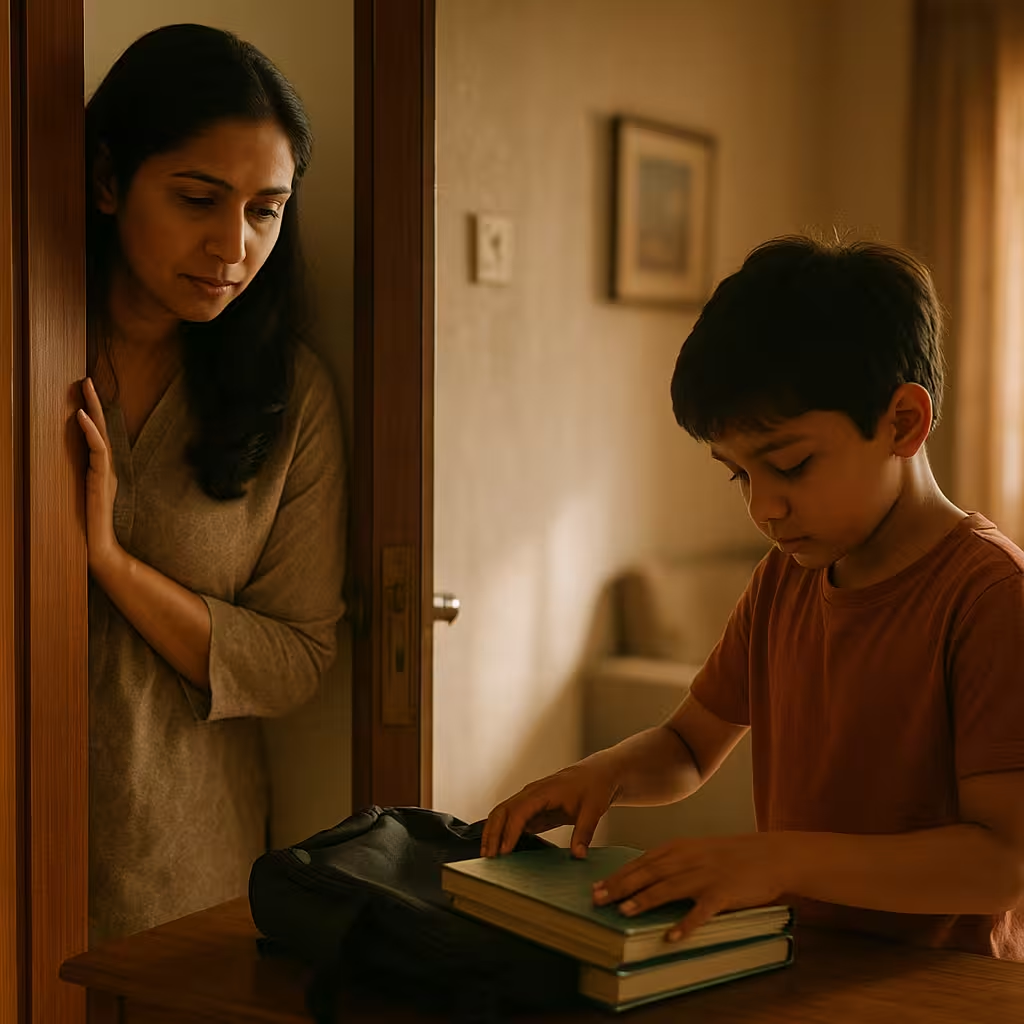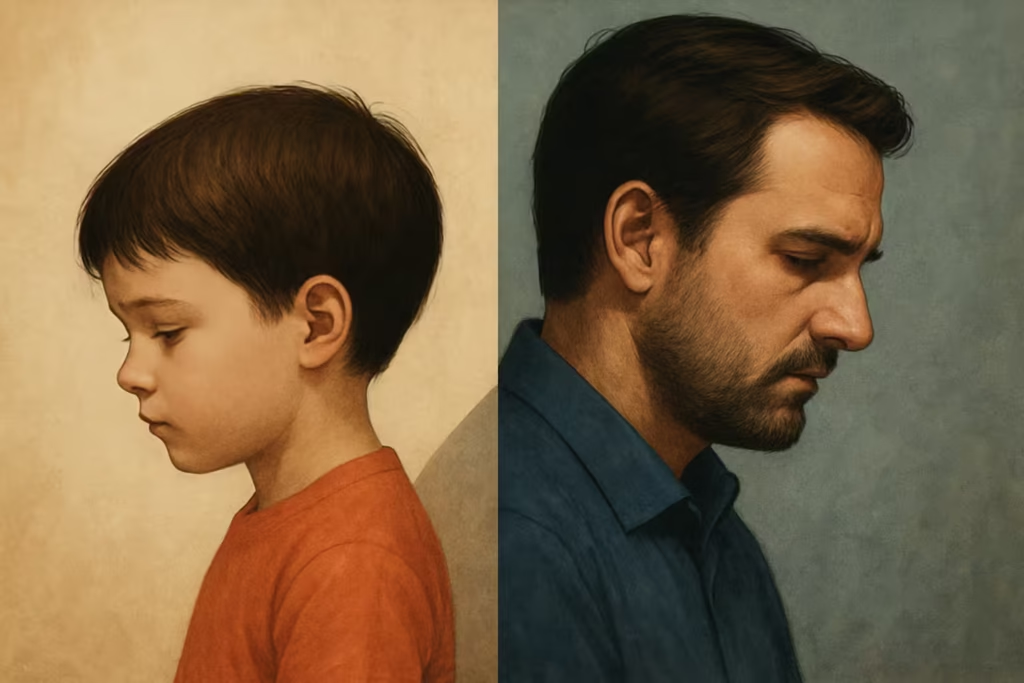
When you look at how this condition shows up in young minds compared to adults, the contrast feels clearer than most people realise. Children often act out their worries before they can put them into words, while adults think through their fears so much that it shapes their entire day. That’s why the whole picture of OCD in children vs adults feels so layered. Kids express their discomfort through small behaviours that parents may not notice at first, and many of these patterns simply look like habits. Adults hide things more, mostly because they feel responsible for everything around them, and this creates a quieter form of struggle that’s easy to overlook.
Children move through quick stages of development, and each stage changes how thoughts and fears take shape. So, childhood OCD symptoms often show up through simple routines or repeating behaviours. These patterns grow from intrusive thoughts in children that they can’t fully explain. On the other hand, adults carry years of experiences, habits, and internal pressures. That’s why OCD behaviour in adults often feels heavier and more organised, shaped by intrusive thoughts in adults that spiral with reasoning and self-judgement.
Well, here’s the thing, developmental differences in OCD play a huge role in how symptoms appear at different ages. OCD signs in kids rise quickly and visibly, while adults show more thought-based reactions that stay hidden. These age-related changes explain why the same emotional struggle looks so different across the lifespan.
“Every age carries its own version of the same struggle.”
Understanding How OCD in Children vs Adults Develops
So, when you start comparing how this condition forms in children and adults, you can see that each age group carries its own reasons, triggers, and patterns. Children move through fast stages of emotional and cognitive growth, so their reactions often come out in simple behaviours. Adults, on the other hand, think through their fears in more defined ways because they’ve lived through years of habits, responsibilities, and expectations. I think this makes the whole idea of comparison a little deeper than it first looks.
Development plays a big role in how thoughts settle in the mind. Children don’t have a full sense of why things bother them. They just feel uncomfortable and try to fix it in the only way they know. Adults usually understand that something feels wrong, but they still struggle to break the loop because the thoughts feel so strong. A study from the Journal of Clinical Child & Adolescent Psychology explains that younger minds show more behaviour-driven symptoms, while adults show more thought-driven patterns.
What Drives Developmental Differences in OCD
When you look at how children experience this condition compared to adults, development becomes the biggest turning point. Kids feel uncomfortable but don’t know how to describe it. Adults recognise something is wrong but get stuck trying to understand it. Age changes the way fears take shape, and I think this makes the whole journey very different for both groups.
- Children respond through actions because their thinking skills are still growing.
- Adults respond through thoughts because they can explain their discomfort.
- Each stage creates different kinds of reactions and patterns.
Growth is not just physical; emotional growth changes how people react to the same intrusive ideas.
How Brain and Behaviour Grow Across Ages
So, as the brain matures, the way people handle stress and intrusive thoughts changes too. Children rely more on simpler reactions because their problem-solving skills are still forming. Adults use more organised thinking, but this can also make their worries feel heavier. You know how kids switch between emotions quickly? Adults don’t do that as much, and that affects how they deal with intrusive fears.
- Younger brains depend more on routine and reassurance.
- Older brains depend more on thinking patterns shaped over years.
- Each stage influences how behaviours and thoughts develop.
Why Age Shapes OCD Expression
As people grow older, life experiences shape how they respond to stressful thoughts. Children often show sudden behaviours because they feel the discomfort strongly but can’t explain it. Adults hide things more, mostly because they don’t want to worry others or look like they’re struggling. I think this difference makes each age group’s experience unique.
- Kids express discomfort quickly and openly.
- Adults manage fears quietly and internally.
- Age shifts how people handle routines, worries, and reactions.
Key Childhood OCD Symptoms Parents Should Notice
So, when you look closely at how this condition shows up in children, you’ll see that the signs are often softer, quicker, and more behaviour-based. Kids don’t always explain what bothers them, so their actions speak much louder than their words. I think this makes things tricky for parents because many of these patterns look like normal childhood habits. Well, here’s the thing, children react before they understand the thought that is troubling them. They feel discomfort, try to reduce it, and repeat the same action again and again.
Early Emotional and Behavioural Signs of OCD in Kids
When children start showing early emotional or behaviour-based signs, it often comes from a place of discomfort they can’t explain. You may notice them trying to fix something again and again, or getting upset when tiny things feel wrong. I think children react quickly because their thoughts and feelings move fast, and they don’t know how to slow them down.
- Repeating the same action to feel calmer
- Getting upset when routines change suddenly
- Feeling overwhelmed by small triggers
So, these little signs often grow quietly before anyone notices them.
How School, Friends, and Routine Reveal OCD Signs in Kids
School life brings structure, rules, and social pressure, which makes certain patterns more visible. When children struggle with intrusive worries, you’ll often see it in how they handle schoolwork, friendships, or even small daily routines. I think this is where parents and teachers spot the earliest noticeable changes.
- Trouble starting or finishing tasks
- Strong need for reassurance from teachers or friends
- Avoiding activities that trigger discomfort
Children try hard to fit in, so their struggles come out in the safe spaces where they feel less judged.
Why Children Show OCD Differently From What Adults Expect
Children don’t think the same way adults do, and that changes the whole picture. Adults recognise patterns and try to understand what’s going on. Kids don’t— they simply follow the feeling. I think this makes their symptoms look confusing, especially when the reactions seem small but happen again and again.
- Kids express discomfort quickly and openly
- They repeat actions before understanding why
- Their routines become a way to manage feelings
As children grow, these patterns slowly shift, but the emotional root stays similar.
How OCD Behaviour in Adults Reflects Deeper Patterns
So, when you look at how this condition appears in adults, the patterns feel more layered than what you see in children. Adults hold years of memories, habits, and responsibilities, and all these experiences shape the way intrusive thoughts settle in the mind. I think many adults learn to hide their discomfort because they don’t want to trouble others or appear overwhelmed. Well, the behaviour you see on the surface often comes from emotional patterns that have been forming for years.
Adults also face pressures from work, relationships, and expectations that children don’t experience. These pressures make their reactions look more structured, even when the feeling inside is just as intense. This difference helps us understand why adults seem calmer outside even when things feel heavy inside.
Mature Thought Patterns That Influence Adult OCD
Adults move through life carrying beliefs shaped by past experiences, and these beliefs influence how they deal with intrusive thoughts. When you compare OCD in children vs adults, you can see how years of memories and responsibilities make grown-ups think in more fixed ways. Many develop rigid thinking because they’ve spent years trying to stay in control, and I think this makes their internal reactions feel stronger even when their behaviour looks organised. The same condition looks simpler in childhood and more layered in adulthood, which is why OCD in children vs adults often shows such a visible contrast.
- Adults analyse their fears more deeply
- Old experiences shape how they react
- Emotional habits form over many years
These thought patterns often become automatic, and adults don’t realise how much they affect their daily routines.
How Responsibilities and Life Pressures Shape Adult OCD
Responsibility changes everything. Adults handle work, home, relationships, and expectations all at once, and each layer adds weight to how they deal with stressful thoughts. You know how grown-ups try to look steady even when things feel messy? That pressure makes symptoms harder to notice.
- Work stress builds stronger worry loops
- Relationship responsibilities add emotional pressure
- Adults feel the need to stay in control all the time
So, responsibilities don’t create the condition, but they do change how the symptoms show up.
Why Adults Hide OCD More Than Children
Adults learn through life that showing their worries can lead to judgement or unnecessary concern. Children don’t think that way; they just respond to the feeling. Adults, on the other hand, try to manage everything quietly. I think this makes their symptoms look less visible, even though the emotional strain can be heavier.
- Adults mask discomfort to appear responsible
- They avoid sharing their struggles
- Their routines become ways to cope silently
Comparing OCD in Children vs Adults: What Makes Them Different?
So, when you compare how this condition appears in children and adults, you start to notice patterns that feel familiar yet completely different at the same time. Children move through emotions fast, and their reactions come out in simple actions. Adults, on the other hand, hold their fears quietly and let the worry build inside. I think this makes the difference more striking than people expect. Development, life experiences, and responsibilities shape how someone reacts to the same intrusive thought. Children show what they feel almost instantly, while adults pause, think, and hide. This helps explain why the same condition looks so different across age groups.
“Different ages carry different ways of reacting to the same fear.”
Differences in Triggers and Obsessions
Children and adults often share similar themes, but the triggers look different. Kids react to simple things because their understanding of the world is still forming. Adults get triggered by complex situations shaped by responsibilities and past experiences. I think these differences show how age changes the way fear grows inside the mind.
- Children react to small changes in routine
- Adults react to thought-driven triggers
- Life stages influence what feels threatening
So, even when the themes feel similar, the starting point often isn’t.
Differences in Compulsions and Coping Behaviour
Children handle discomfort through visible actions. Adults try to stay composed, so their coping behaviour becomes more internal. You know how children repeat actions without thinking much about why? Adults think too much, and that shapes their reactions.
- Kids use actions to feel safe
- Adults use internal strategies to stay calm
- Different coping tools develop at different ages
The same emotion takes a different shape depending on how long someone has lived with it.
How Age Affects Insight and Awareness
Children don’t always understand why they feel uncomfortable. Adults do, but that awareness doesn’t always make things easier. Insight grows with age, and that changes how someone recognises and responds to their symptoms. I think this makes the experience feel different for both groups, even when the core feeling is similar.
- Younger children rely on intuition
- Older children and adults use reasoning
- Insight grows slowly across development
When to Seek Support: Age-Specific Guidance for Children and Adults
So, knowing when to reach out for help matters a lot because OCD in children vs adults grows in very different ways. Children show their discomfort early through actions, while adults carry their worries quietly for years. I think many families wait too long because the signs feel confusing at first. Well, here’s the thing, the earlier someone gets help, the smoother the journey becomes, no matter the age. Support works best when symptoms are noticed before they start shaping daily life too strongly.
Parents often look for answers when routines start falling apart, but adults hesitate because they try to manage everything on their own.
Red Flags for Parents to Get Help Early
Children often show early signs that something feels uncomfortable, even if they don’t know how to talk about it. Small patterns can grow quietly if no one pays attention. I think parents understand their children best, so noticing changes early can make all the difference.
- Repeating the same action many times
- Avoiding tasks that feel small to others
- Getting upset when tiny routines change
So, these early behaviours are signals that support may be needed.
When Adults Should Consider Professional Treatment
Adults wait longer to seek help because they feel responsible for managing everything alone. They hide their worries, hoping things will settle on their own. I think this makes their symptoms look quieter but heavier. When routines become difficult or worries interrupt daily life, it’s a strong sign that professional support could help, especially when you compare how OCD in children vs adults shows up over time.
- Feeling stuck in repeated thoughts
- Managing responsibilities becoming harder
- Daily routines taking longer than before
Reaching out early can prevent symptoms from becoming harder to manage later.