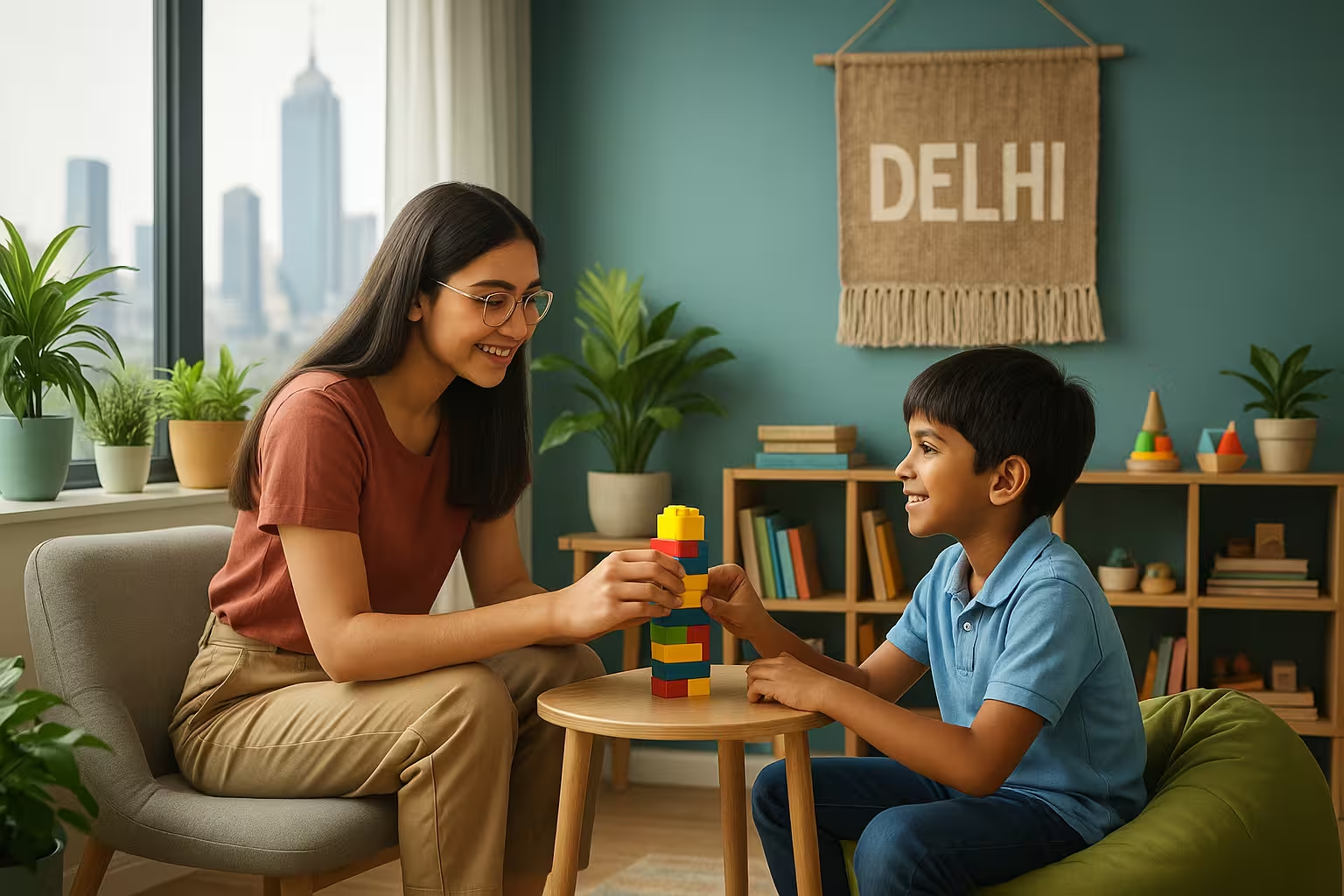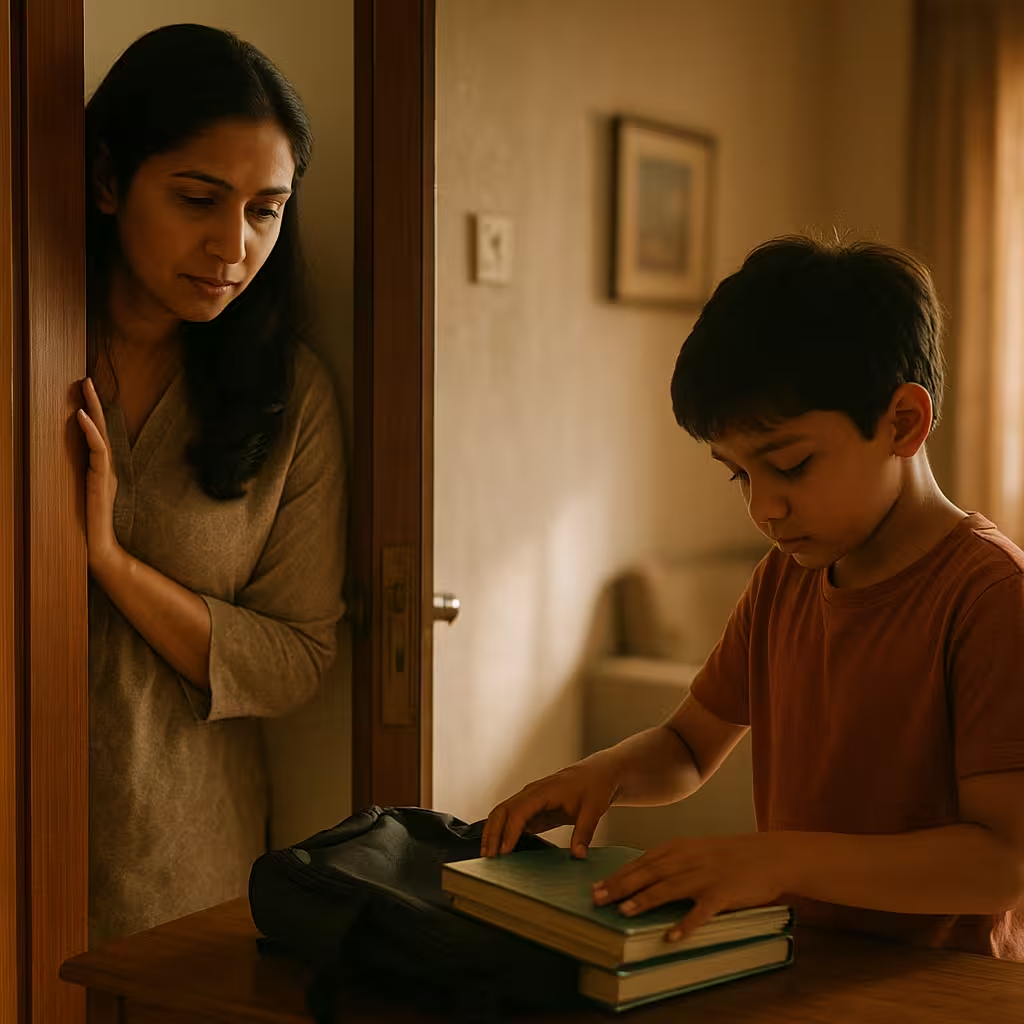
When your child is diagnosed with Obsessive-Compulsive Disorder (OCD), it can feel like your world has shifted overnight. Many parents describe the experience as walking on eggshells—unsure what might trigger their child’s fears, rituals, or repetitive behaviors. But here’s the hopeful truth: you play a crucial role in your child’s healing. Understanding how parents can support a child during OCD treatment at home can make therapy far more effective and help your child feel safe and understood every single day.
According to the National Institute of Mental Health (NIMH), about 1 in every 200 children and teens experience OCD. The good news is that early and consistent family involvement—especially in daily routines and emotional regulation—can greatly reduce distress and improve treatment outcomes.
If you’re just beginning this journey, start by exploring our detailed resource: OCD in Children: 6 Proven Signs and Treatments Every Parent Must Know. It explains how to recognize the early signs, what treatment options exist, and how to build a supportive home environment where your child feels truly understood.
“A supportive home is not a therapy room, but it is the soil where therapy takes root.”
1. Understand What OCD Really Is
OCD is not a simple habit or personality trait. It is a mental health condition involving unwanted intrusive thoughts (obsessions) and repetitive actions (compulsions) performed to reduce anxiety. Imagine your child’s mind as a looped song they cannot switch off. Every time they try to stop, anxiety spikes again.
According to a study in the National Library of Medicine, when parents are educated about OCD and trained to respond constructively, relapse rates fall by nearly 40%. Understanding the science behind the disorder helps you separate your child’s personality from their symptoms.
- OCD is driven by anxiety, not choice.
- Your child is not being difficult.
- Empathy and education are your strongest tools.
2. Create a Calm and Predictable Environment
Children with OCD often feel safe in predictable surroundings. Think of it as giving them an emotional seatbelt in an unpredictable world. When routines are disrupted, anxiety often spikes.
Try the following steps to stabilize their environment:
- Maintain consistent sleep and meal times.
- Use visual schedules or checklists for daily tasks.
- Encourage mindfulness or short breathing exercises together.
- Integrate simple Indian practices like pranayama and short guided meditation to calm the nervous system.
The Mayo Clinic notes that relaxation training can help reduce anxiety levels, making therapy more effective.
3. Support Without Enabling
Parents often confuse support with helping their child avoid discomfort. But enabling the compulsions can actually strengthen the OCD cycle. For example, if your child repeatedly asks if their hands are clean, giving repeated reassurance feeds the anxiety loop.
Instead, support your child in facing discomfort. You can say:
- “I know this feels hard, but you can handle the anxiety.”
- “Remember what your therapist said, this feeling will pass.”
- “I’m proud of you for trying, even when it’s scary.”
This teaches them resilience, not dependency. Think of it like teaching your child to swim. You stay close enough for safety but do not hold them up constantly, allowing them to gain strength.
4. Stay Connected With the Therapist
OCD therapy, especially Exposure and Response Prevention (ERP), requires consistency at home. Collaborate with your child’s therapist to align on strategies. Ask questions about what to reinforce and what to avoid.
- Keep a progress log for tracking symptoms and triggers.
- Share updates with the therapist between sessions.
- Attend family therapy sessions to improve communication.
If your child is already under care, consider connecting with our Childhood & Teenage Counselling team for integrated family guidance.
5. Encourage Healthy Routines and Role Model Calmness
OCD recovery is not just about reducing rituals. It’s about building a balanced, healthy lifestyle. When your child sees you managing stress with calmness, they learn by example.
| Healthy Routine | Benefits for OCD Recovery |
|---|---|
| Regular physical activity (e.g., cycling, yoga) | Releases endorphins, reduces anxiety |
| Nutritious meals and hydration | Improves focus and emotional stability |
| Reduced screen exposure | Prevents overstimulation and obsessive scrolling |
| Family relaxation time (music, evening walk) | Promotes bonding and emotional balance |
Parents can use simple metaphors to help their child understand progress: “Our mind is like a garden. Therapy is pulling out weeds, but we must also water the healthy plants daily.”
6. Open Conversations Build Strength
In many families, emotions are not discussed openly. But suppressing feelings can increase internal stress. Sit with your child at night, maybe over dinner or while watching a movie, and talk about their feelings naturally. Normalize therapy by calling it mind training, just like we train for sports or studies.
Encourage your child to express:
- What made them anxious today?
- What helped them feel calmer?
- Which coping tool worked best?
This builds self-awareness and teaches emotional vocabulary. Remember, when you talk about mental health openly, you break stigma for generations to come.
“Children learn emotional strength not from perfection, but from connection.”
7. Know When to Seek Additional Help
Even with home support, some children may need extra intervention. Warning signs that your child’s OCD may be intensifying include:
- Increased rituals or avoidance behaviors.
- Sleep disturbances or panic episodes.
- Withdrawal from school or social interactions.
In such cases, speak with your therapist immediately. MyPsychologist offers OCD therapy options that integrate clinical and family support, ensuring your child receives holistic care.
8. Celebrate Small Wins
OCD progress is gradual, but every small step counts. When your child resists a compulsion, even once, recognize it. This builds self-confidence and shows that progress is possible. Use a simple reward system or a progress wall where achievements are marked weekly.
Parents can say things like:
- “You handled that worry so well today.”
- “You didn’t check that door even once. That’s amazing!”
- “Every small win adds up to big progress.”
Positive reinforcement turns recovery into a shared victory, not a lonely struggle.
Want to Read More?
Learn more about early symptoms and therapy methods in our detailed guide: OCD in Children: 6 Proven Signs and Treatments Every Parent Must Know.
Want to speak to a psychologist? Click here to book a private consultation with MyPsychologist.
Disclaimer: This article is for educational purposes only. Please consult a licensed psychologist or mental health professional for diagnosis and treatment options.