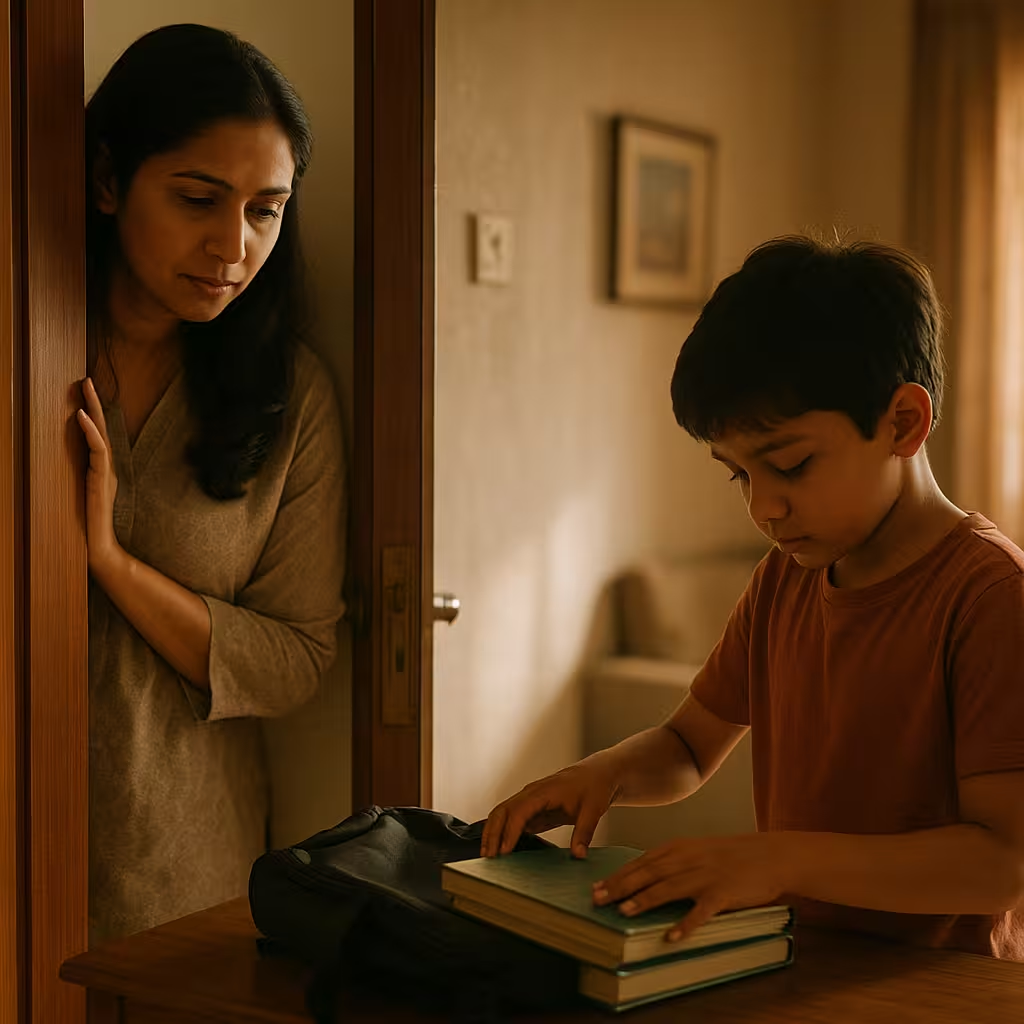
When parents hear the term “therapy” for their child, they often imagine long sessions of talking or analysis. But for children with OCD (Obsessive-Compulsive Disorder), one treatment stands above all Cognitive Behavioral Therapy (CBT), especially a method called Exposure and Response Prevention (ERP). This scientifically proven therapy has helped thousands of children regain control of their thoughts, reduce rituals, and rebuild confidence.
In this article, we’ll explore how CBT for OCD in children works, what happens during sessions, why exposure therapy is safe, and what parents can do to support progress at home. Understanding this process turns fear into trust the trust that your child can recover, one step at a time.
“CBT doesn’t erase fears it teaches the brain to stop reacting to them.”
What Is CBT and Why It Works for OCD
Cognitive Behavioral Therapy is a structured, short-term form of therapy that helps children recognize unhelpful thoughts and replace them with healthier ones. In OCD, these thoughts often appear as intrusive fears (“I might get sick” or “Something bad will happen”). The compulsive behaviors (washing, checking, counting) are attempts to relieve that anxiety.
CBT breaks this cycle by helping children notice the pattern and challenge the connection between their thoughts and rituals. According to the American Psychological Association, CBT is the most effective non-medication treatment for OCD and anxiety disorders in children, with improvement rates between 60–70%.
Understanding Exposure and Response Prevention (ERP)
ERP is the heart of CBT for OCD. It’s based on a simple yet powerful principle: the more a child faces their fear without performing the ritual, the less power that fear holds over time. The brain “unlearns” the false connection between anxiety and action.
For example:
- A child afraid of germs touches a doorknob and resists washing hands immediately.
- A child who feels they must check homework ten times learns to stop after two checks.
At first, this feels uncomfortable. But with gentle guidance from the therapist, the child realizes that nothing bad happens when they break the ritual. Gradually, anxiety decreases a process called habituation.
Research by International OCD Foundation shows that ERP has one of the highest success rates among all OCD treatments for children and teens.
Step-by-Step: How CBT and ERP Are Done for Children
Here’s what a typical therapy journey looks like:
1. Assessment and Education
The therapist begins by assessing OCD severity using tools like the Children’s Yale-Brown Obsessive Compulsive Scale (CY-BOCS). Parents are also involved to understand how OCD operates and why reassurance, though comforting, may worsen symptoms.
2. Creating a Fear Hierarchy
Next, the child and therapist list triggers from least to most distressing. For example, touching a school desk might be mild, while using a public washroom could be intense. This list becomes the roadmap for exposure exercises.
3. Exposure Practice
The therapist then guides the child through small, controlled exposures. If the child fears contamination, they might start by touching their own desk, then progress to public surfaces each time resisting the urge to wash.
4. Response Prevention
This is the most critical part. The child is supported in resisting the compulsion (like washing or checking). Over time, anxiety naturally fades, teaching the brain that safety doesn’t depend on rituals.
5. Homework and Family Involvement
Children practice exercises between sessions. Parents are taught how to encourage progress without giving reassurance or participating in rituals. The therapist monitors progress weekly and adjusts tasks as confidence grows.
Why CBT Is So Effective for Kids
CBT works because it doesn’t just talk about fears it retrains the brain’s fear response. Children learn to tolerate discomfort, think flexibly, and build real-world confidence. Over time, the brain rewires its “error signals,” reducing both obsession intensity and compulsion frequency.
In children, progress is often faster than in adults because their neural pathways are still developing. Early therapy can prevent OCD from becoming chronic in adulthood. NIMH data shows that children who start CBT early are twice as likely to achieve full remission compared to those who delay treatment.
Common Myths About Exposure Therapy
- Myth: Exposure therapy forces children into fear.
Truth: It’s done gradually and safely, with full consent and comfort. - Myth: CBT ignores emotions.
Truth: CBT helps children name, understand, and manage emotions better than before. - Myth: Parents can’t help in CBT.
Truth: Family involvement is vital for reinforcement at home.
“Exposure therapy doesn’t take courage away it builds it, one small step at a time.”
How Parents Can Support CBT Progress
- Be patient: Progress isn’t linear. Some weeks will be easier than others.
- Don’t join rituals: If your child asks you to check, clean, or repeat with them, gently decline and remind them of therapy tools.
- Celebrate small wins: Acknowledge bravery, not perfection. Confidence grows through reinforcement.
- Model calm behavior: Children learn emotional regulation by observing how parents handle stress.
- Keep communication open: Ask how each session felt rather than if it was “good.” Focus on experience, not outcome.
Learn more about identifying early symptoms and therapies in our main guide: OCD in Children: 6 Proven Signs and Treatments Every Parent Must Know.
When CBT Alone Isn’t Enough
Most children respond very well to CBT, but some may need a combination of therapy and medication. Selective Serotonin Reuptake Inhibitors (SSRIs) are sometimes prescribed by a child psychiatrist when symptoms are severe or when anxiety prevents participation in therapy.
Medication doesn’t replace therapy it makes therapy more effective by calming the brain’s hyperactive fear circuits. Combined treatment can reduce symptoms by up to 80%.
Real-Life Progress: What Parents Often Notice
Parents frequently report small but powerful changes after a few sessions of CBT:
- Less reassurance-seeking and more independent coping
- Shorter rituals and quicker recovery from anxiety spikes
- Improved school performance and focus
- Greater willingness to try new situations
These are signs that the brain is “retraining” itself slowly, but steadily.
Want to speak to a psychologist? Click here to book a private consultation with MyPsychologist.
Disclaimer: This article is for educational purposes only. Please consult a licensed psychologist or psychiatrist for personalized diagnosis and treatment plan