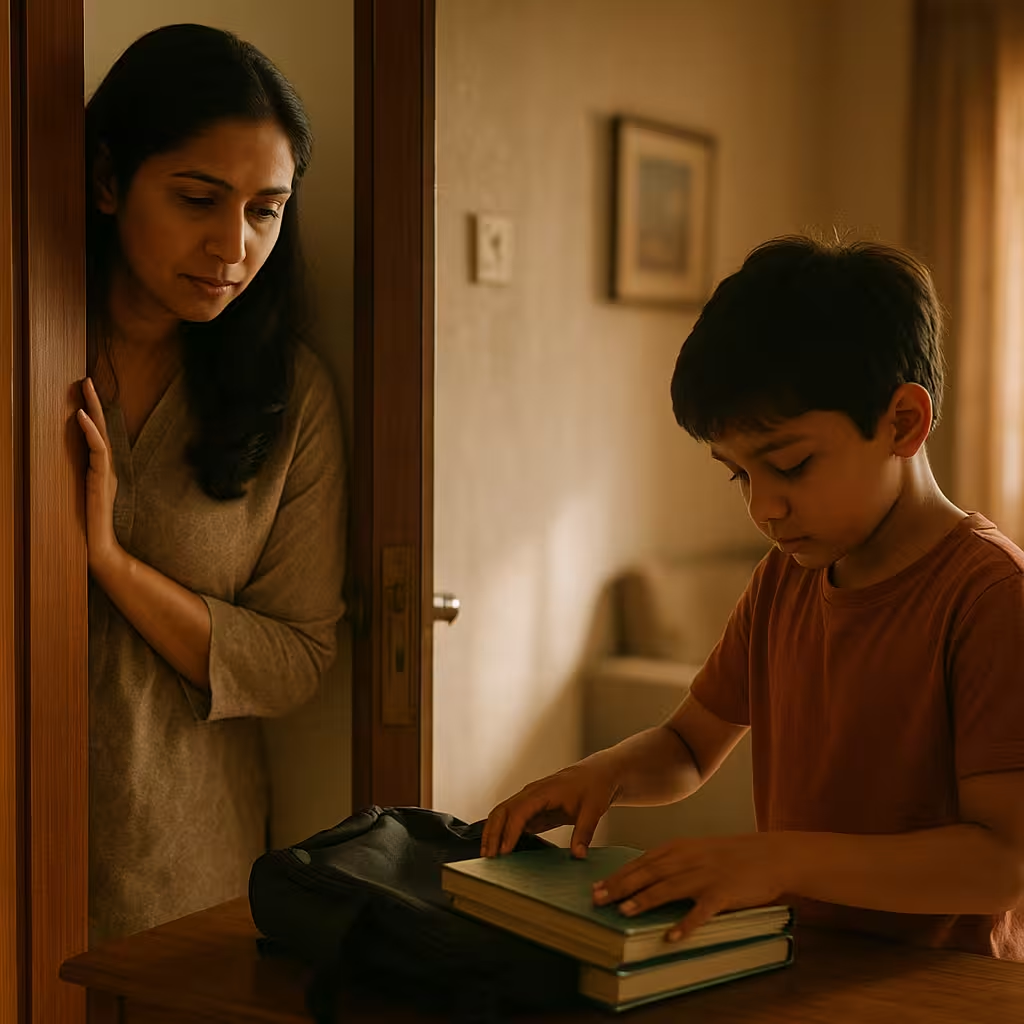
When your child keeps repeating thoughts, fears or actions, it can feel confusing and overwhelming for the whole family. Many parents in Noida share that they tried to stop the habits at home, but the cycle continued. This is when child OCD counselling in Noida becomes important. At MyPsychologist, our team works online from Agra and supports parents in Noida through structured, child friendly therapy sessions that help break the worry loop. These sessions bring gentle clarity to a child’s mind and provide parents with guidance for everyday support.
When a Child’s Mind Turns One Thought into Many
Children often experience thoughts more intensely than adults. A single worry can start as a small idea but grow into something that feels very big inside their mind. For example, a child may think a surface is dirty, and that thought keeps coming back until they wash many times. Or a child may think they made a mistake in homework, and the doubt becomes so strong that they check the book again and again.
These thoughts feel urgent. The child feels that they must act to reduce the discomfort. This creates what we call the OCD cycle. In our online child OCD counselling in Noida, we help children understand how this cycle works so they feel less afraid of their own thoughts. Families in Noida often look for nearby support when symptoms grow. When children learn the idea of the worry loop, they stop feeling that the thought controls their actions.
What Children Feel But Cannot Express
Many children find it hard to describe their inner experience. They may say nothing or only show behaviour changes. Parents often sense that something deeper is happening, but they may not know how to respond. In our sessions, we notice three groups of signals that appear often in child OCD treatment in Noida.
Emotional experiences inside the child
- Fear that something bad will happen if they do not follow a ritual.
- Feeling responsible for events that are not in their control.
- Shame or confusion about their own thoughts.
- Frustration when rituals interrupt their daily life.
Behaviour patterns visible at home and school
- Repeating actions like washing, checking, arranging or counting.
- Avoiding objects or activities that trigger worry.
- Seeking constant reassurance from parents.
- Repeating silent mental routines such as counting or prayers.
Physical changes in the body
- Restlessness or inability to settle down.
- Changes in appetite or sleep.
- Tight shoulders or fast breathing during anxiety spikes.
- Stomach aches linked to school or social situations.
These signs together help parents identify early patterns and seek a child OCD expert in Noida through our online platform for guidance. Parents often explore options outside their immediate area, they can also consult an experienced child counsellor in Agra.
The Hidden Science Inside a Child’s Mind
Child OCD is not a choice or a habit issue. It is a repeated thought–action cycle that becomes stronger over time if not addressed. The child is not choosing the rituals. Their inner system reacts to fear, uncertainty and the search for safety. This understanding helps parents respond with compassion instead of frustration.
When a child faces an unwanted thought, the mind sends a warning signal. The child feels anxious. The body becomes uncomfortable. A ritual reduces the feeling for a moment, so the mind assumes that the ritual helped. This makes the ritual stronger the next time. Studies show that certain inner processes shape how these patterns grow and settle. When these processes work differently, the child may find it harder to shift out of the loop.
Online child OCD counselling in Noida teaches the child how to interrupt this loop gently and safely. They learn that thoughts do not always reflect reality. They learn that feelings settle even when rituals are not followed. Over time, the inner system forms a steadier pattern.
How OCD Looks Different in Different Children
Child OCD has many forms and each one affects the child’s day in a unique way. At MyPsychologist, our online sessions explore these patterns deeply so therapy becomes personalised and meaningful.
The pattern of doubt and checking
- Child checks school supplies many times.
- They doubt their memory and abilities.
- They repeat questions for reassurance.
Contamination fear
- Child avoids touching objects like desks, toys or books.
- They wash hands or clean surfaces repeatedly.
- They fear illness or dirt even when the environment is clean.
Intrusive thoughts
- Unwanted thoughts enter the child’s mind repeatedly.
- They use mental rituals to feel safe.
- They feel afraid to share their thoughts with parents.
The pattern of perfection and order
- Child arranges items until they feel correct.
- They find it hard to move to the next task.
- They become upset when objects are moved.
A trained child OCD specialist in Noida working online will help identify these patterns and plan therapy based on the child’s type and personality.
Why These Patterns Begin and What Keeps Them Going
The reasons behind child OCD are layered. Understanding these reasons helps parents respond with patience and structure.
Internal personality factors
- Children who worry more naturally.
- Children who have high sensitivity or perfectionism.
- Children who feel responsible for things beyond their control.
Environmental factors
- School pressure and performance anxiety.
- Changes at home such as a move or illness.
- Family stress that creates tension in the child.
Deep internal influences
- Imbalanced serotonin affects mood and worry.
- Dopamine affects habit formation.
- Certain circuits become overactive under stress.
This combination explains why child OCD counselling in Noida must be deeply structured rather than surface level. Therapy that respects the child’s emotional, behavioural and neurological story brings the best outcome.
How Our Online Therapy Helps Your Child Step By Step
Our online model is not passive. It is active, engaging and tailored to each child’s pace. Families from Noida join these sessions from home through phone, tablet or laptop. Sessions are calm, visual and playful so children stay engaged.
Detailed assessment and mapping
- We study the child’s daily routines.
- We understand the specific triggers.
- We map the exact loop of thought, feeling and action.
Cognitive Behavioural Therapy with real life examples
- Children learn how thoughts influence emotions.
- We use stories, drawings and role play.
- We help them challenge the thought instead of obeying it.
Exposure and Response Prevention in safe steps
- We create a fear ladder with the child.
- We start with the easiest step so the child feels confident.
- We guide the child to face the fear without the ritual.
ACT to help children accept and move forward
- Children learn that thoughts are just thoughts.
- They focus on values like learning, play and family time.
- They learn skills to calm the body.
Parent training for support at home
- Parents learn what helps and what harms.
- We teach responses that reduce reassurance seeking.
- We create a home plan that supports therapy.
Choosing the right expert
You can explore trained professionals on our experts page. All therapists listed here work with children and follow evidence based methods. Visit MyPsychologist Experts to select the right child OCD expert in Noida for online support.
Stories of Strength from Noida Families
Aarav’s story
Aarav was a bright 10 year old who checked his school bag many times every morning. His fear of mistakes made him anxious before school. In online sessions we identified his core fear and used CBT to help him trust his decisions. ERP helped him reduce checking from many times to once. With time he became more confident and regained control over his mornings.
Diya’s story
Diya was 9 and avoided touching classroom objects because of fear of contamination. She washed her hands very often which affected her school and home routines. Through online ERP, Diya slowly touched objects for a few seconds, then longer, then comfortably. Her parents learned how to respond calmly, which reduced her fear further. Within weeks she returned to playing with her friends.
The 16 Step Framework for Child OCD Recovery
- Detailed Clinical Assessment baseline and symptom mapping.
- OCD Narrative Mapping break down the client’s unique themes and loops.
- Cognitive Deconstruction identify distortions and core beliefs.
- Emotional Pattern Identification surface suppressed emotions.
- Thematic Counselling resolve underlying themes fueling OCD.
- Trauma Identification when trauma powers OCD cycles.
- Personalised CBT Plan bespoke techniques for the individual.
- Customised ERP Design exposures tailored to daily life.
- Behavioural Corrections fix avoidance and reassurance patterns.
- ACT Acceptance and Commitment Therapy build acceptance and flexibility.
- Lifestyle and Wellness Integration sleep, routine, grounding, and self care.
- Family Engagement Training train caregivers to support recovery.
- Daily Session Monitoring twenty four hour progress tracking.
- Weekly Performance Analysis refine strategy and exposures.
- Three Layer Recovery Validation client, assigned therapist, senior expert team confirmation.
- Post Recovery Support relapse prevention and long term maintenance.