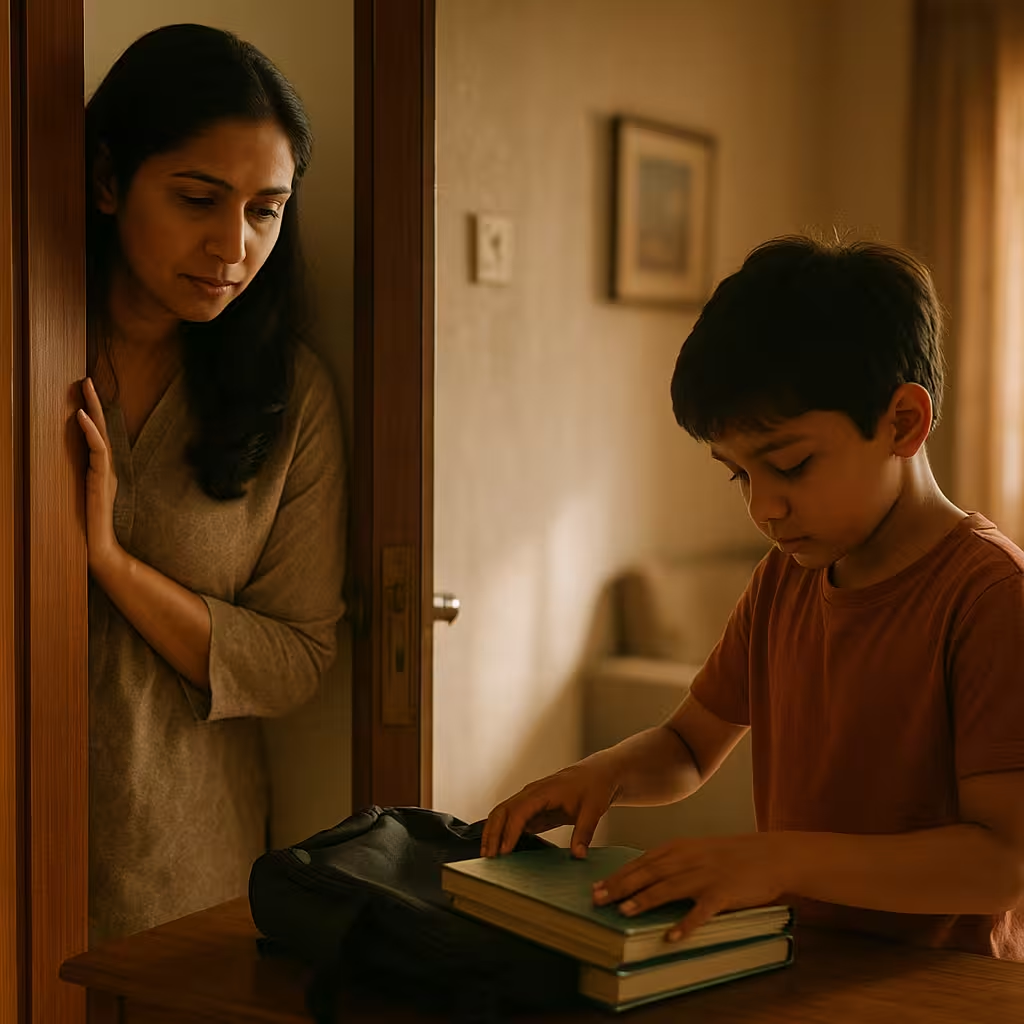
You ever seen your kid doing something again and again maybe washing hands over and over, checking a bag, or arranging toys till they look “just right”? You probably thought, “he’s just a bit cautious.” But sometimes it’s not about neatness. It’s about fear of something going wrong if they don’t do it a certain way. That’s where OCD counselling for children becomes important.
Here’s the thing OCD (obsessive compulsive disorder) can make kids feel like their own thoughts are bossing them around. They know it doesn’t make sense, yet they can’t ignore it. Slowly, small routines become rules. Confidence drops. But with child OCD therapy, they start learning that thoughts don’t have to control them they can take control back.
In OCD counselling for children, counsellors help kids understand those fears, handle anxiety, and feel proud again. According to the International OCD Foundation, structured therapies like CBT (Cognitive Behavioural Therapy) and ERP (Exposure and Response Prevention) help about 70% of children manage OCD effectively (source).
So, if your child seems worried, keeps repeating things, or struggles to relax unless something’s “just right,” don’t see it as bad behaviour. It could be their mind asking for help and that’s something counselling for OCD kids can truly fix.
Understanding OCD Counselling for Children
Most parents imagine counselling as a simple “talking session.” But OCD counselling for children is different. It’s hands-on, practical, and designed around how kids actually think. The goal isn’t to suppress fears it’s to teach the brain to stay calm when fear knocks on the door.
According to the Child Mind Institute, early OCD treatment for children can stop obsessive thoughts from growing stronger and help kids manage anxiety before it becomes a pattern (source).
What Is OCD Counselling and How It Works for Kids
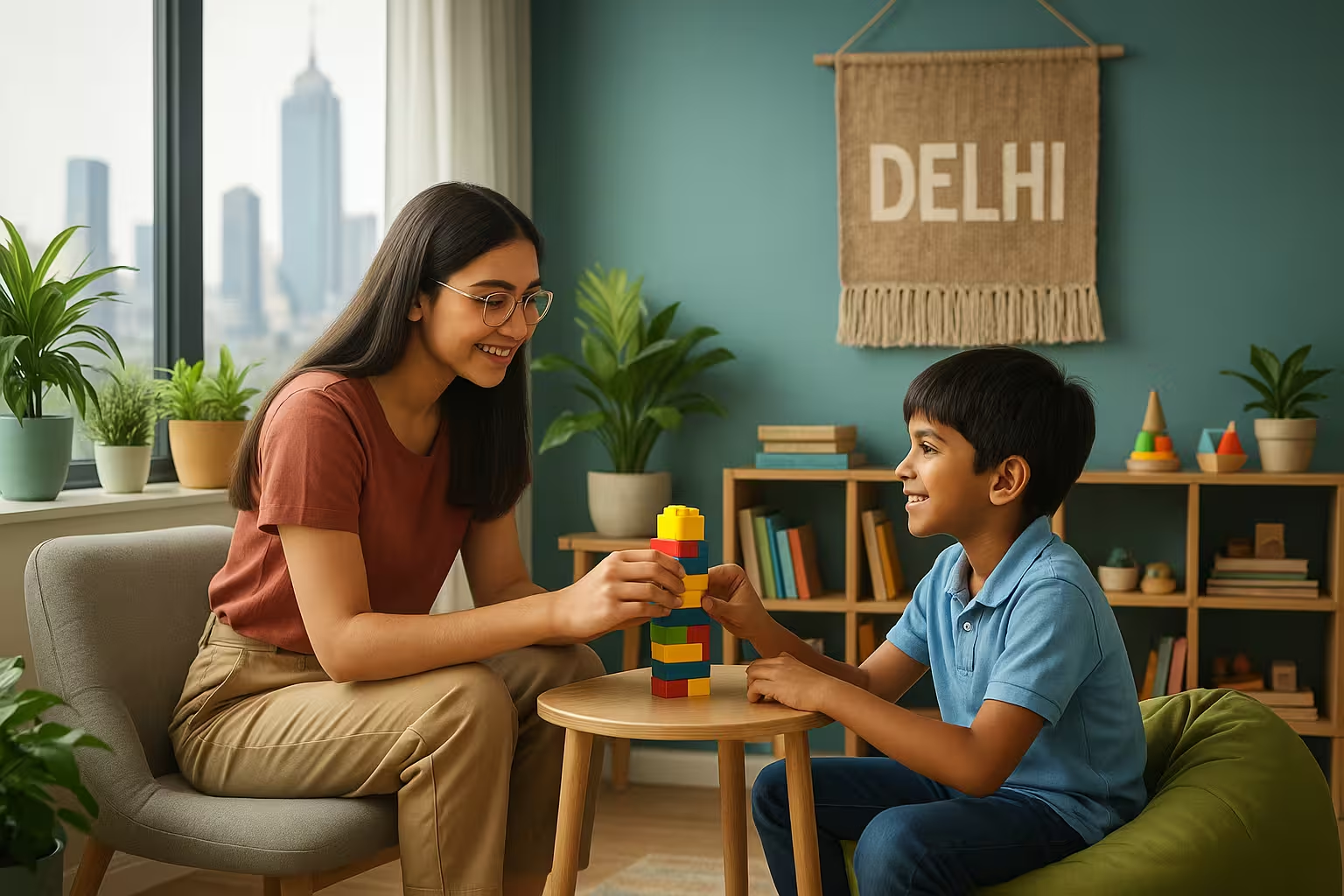
Here’s what really happens in OCD counselling for children. It’s not a child lying on a couch while a therapist nods. Sessions are creative, playful, and carefully structured.
Therapy usually includes:
- Helping the child spot intrusive thoughts and name them.
- Identifying triggers what makes them anxious or repetitive.
- Teaching simple ways to handle anxiety instead of escaping it.
- Using tools like breathing, journaling, or visualization.
Kids don’t learn well through lectures. They learn through trust, games, and stories that make them feel understood.
The whole point of child OCD therapy is to show them: thoughts come and go, but how you react is in your hands.
Why Children Need a Different Approach to OCD Therapy
Well, the truth is kids aren’t just mini adults. Their brains process fear differently. Traditional therapy feels too strict for them. That’s why OCD counselling for children focuses more on comfort and family participation.
Here’s what makes it different:
- Short, interactive sessions that match their attention span.
- Stories and visual tools that make it easier to explain feelings.
- Parents stay involved to continue progress at home.
- Rewards and gentle motivation instead of scolding or pressure.
According to an article, combining play-based therapy with CBT helps children recover faster than adult-style therapy (source). That’s one of the biggest benefits of counselling for OCD in kids it’s built entirely around how a child’s mind learns best.
Role of a Child Psychologist in OCD Counselling
A child psychologist for OCD is more than just a therapist. They’re the bridge between the child’s silent fears and the parent’s understanding.
They usually:
- Create a space where kids talk openly without fear of judgment.
- Use art, play, and stories to help them express feelings.
- Design a therapy plan mixing CBT and ERP around the child’s comfort.
- Guide parents on how to respond calmly to rituals at home.
The study found that children treated by trained psychologists show a 60–70% improvement within a few months of OCD treatment for children.
Signs Your Child May Benefit from OCD Counselling
You know your child better than anyone. You’ve seen their moods, their quirks, and the little ways they express fear or excitement. But sometimes, OCD in children hides behind everyday behaviour. What looks like “carefulness” or “good habits” can actually be signs of anxiety-driven rituals. That’s where OCD counselling for children becomes crucial it helps you tell the difference between a harmless habit and a cry for help.
Many parents don’t notice OCD until routines start controlling the child, not the other way around. What begins as “checking once more” or “keeping toys perfectly arranged” slowly becomes something they must do to feel safe. These repetitive actions start stealing their playtime, confidence, and peace.
When you see your child trapped in such patterns, remember it’s not defiance or stubbornness. It’s fear wearing the mask of routine. OCD counselling for children helps kids recognise these fears and teaches them how to break the cycle with courage.
Behavioural Clues That Indicate OCD in Kids
Children often don’t have the words to describe what’s happening in their minds, so their behaviour speaks for them. You might notice:
- Checking, washing, or counting again and again
- Rearranging toys until it “feels right”
- Avoiding certain numbers, objects, or people
- Taking forever to get ready or finish homework
These behaviours are the brain’s way of seeking control over anxiety. According to the Cleveland Clinic, most children with OCD spend at least an hour every day caught in thoughts or rituals and many don’t even realise it (source).
Child OCD therapy helps children understand why these actions happen and how to resist them step by step. Instead of scolding them for “doing it again,” therapy teaches them that they can feel safe without repeating the same routine.
“Children rarely say, ‘I’m scared.’ They show it through routine.”
Emotional and School-Related Struggles to Watch For
OCD doesn’t only affect routines; it quietly creeps into emotions, friendships, and school performance. A child might appear distracted or slow, but what’s really happening is mental exhaustion from constant worry.
In school, OCD may show up as:
- Asking teachers for reassurance repeatedly (“Did I write that right?”)
- Avoiding group work or playtime out of fear of contamination or mistakes
- Spending too much time rechecking homework
- Meltdowns when plans or timetables change unexpectedly
At home, you might notice your child seeking perfection in small things from folding clothes neatly to aligning pencils in a straight line. These habits often come from the mind’s attempt to control fear.
The Anxiety and Depression Association of America (ADAA) found that untreated OCD can reduce school engagement. But with early counselling for OCD kids, children regain confidence in their abilities and learn that mistakes are part of being human not signs of danger.
When Family Support Alone Isn’t Enough
Love is powerful but it can’t always untangle the knots of OCD. Parents often try to comfort their child by saying, “It’s okay, nothing bad will happen.” While well-intentioned, this reassurance sometimes strengthens OCD because the brain starts depending on that comfort to feel safe.
You should consider OCD counselling for children if:
- Rituals keep increasing despite your patience
- Your child panics or cries when stopped
- Anxiety affects their sleep, studies, or social life
Child psychologists for OCD are trained to gently break these patterns using structured therapy, helping both parents and children understand how to respond effectively.
“Love helps healing begin but therapy teaches it to last.”
How OCD Counselling for Children Builds Confidence and Calm
Kids with OCD often feel like prisoners of their own thoughts unsure why their mind keeps saying “do it again.” OCD counselling for children gives them a map out of that maze. Therapy teaches them to separate fear from fact, and to face discomfort with courage instead of avoidance.
When therapy begins, most children are scared to resist their rituals. But over time, they start to see progress one skipped ritual, one brave decision, one calm breath. Slowly, those moments add up, and confidence replaces fear.
Counsellors use child OCD therapy sessions to help kids understand that fear is not their enemy it’s a false alarm that can be silenced with practice. Parents also learn how to react with empathy instead of frustration, creating a peaceful environment where recovery feels safe and possible.
Helping Kids Break Free from Fear and Rituals
Therapists often explain the “fear cycle” how a thought triggers anxiety, which leads to a ritual for relief, which then strengthens the fear again. OCD counselling for children breaks that cycle through awareness and practice.
Kids learn that when they face their fear (say, touching a door handle or leaving toys slightly crooked) and don’t perform the ritual, the fear eventually fades. It’s tough at first, but each success teaches the brain that it doesn’t need rituals to feel safe.
Parents are often amazed at how quickly their child starts trusting themselves again.
Replacing Anxiety with Positive Coping Skills
Instead of reacting with panic, therapy gives kids healthy ways to manage anxiety. A few examples include:
- Mindful breathing: slowing down the body calms the racing mind.
- Journaling or drawing: externalising fear makes it smaller.
- “Worry boxes”: writing fears and locking them away as a symbolic release.
- Mini goals: turning fear-facing into small, achievable challenges.
These techniques help build long-term calm one of the greatest benefits of counselling for OCD in kids.
Small Wins That Rebuild Self-Esteem in OCD Kids
Healing isn’t about one big victory it’s hundreds of small ones. Each time a child resists a ritual or faces a fear, they reclaim a bit of their confidence. Child OCD therapy celebrates these moments with praise and encouragement, helping the child feel proud instead of guilty.
Therapists often turn these milestones into games or stories that make bravery feel rewarding. The more they succeed, the more they believe in their own ability to manage OCD.
Techniques Used in Child OCD Therapy
Every child is unique their fears, thoughts, and reactions to anxiety can look very different, even when the diagnosis is the same. That’s why therapists never use a one-size-fits-all plan. Instead, they spend time understanding how your child’s OCD shows up what triggers it, how they cope, and what brings them comfort. From there, a personalised roadmap is created so the treatment feels safe, manageable, and encouraging rather than overwhelming.
Most OCD counselling for children sessions combine two evidence-based methods that work best together: Cognitive Behavioural Therapy (CBT) and Exposure and Response Prevention (ERP). CBT helps children recognise their irrational thoughts and replace them with calm, realistic thinking, while ERP slowly teaches them to face fears without giving in to rituals.
Together, these therapies form the core of modern OCD treatment for children, helping young minds learn that anxiety is not dangerous it’s simply a feeling that can be managed and understood. The goal isn’t just to stop compulsions, but to empower children with lifelong coping tools so they can handle future challenges with strength and confidence.
Cognitive Behavioural Therapy (CBT) for OCD in Kids
CBT(Cognitive Behavioural Therapy) helps children identify irrational thoughts and challenge them logically. For example, a child might believe, “If I don’t wash my hands five times, mom will get sick.” In therapy, they test this belief safely and learn that nothing bad happens. Over time, the brain stops sending false alarms.
The American Psychological Association states that CBT improves symptoms for up to 70% of children with OCD. It’s one of the most effective long-term approaches in OCD treatment for children because it empowers kids to manage their own thoughts.
Exposure and Response Prevention (ERP) Made Simple for Children
ERP is gentle, step-by-step exposure to fears touching, facing, or talking about what scares the child, and learning not to respond with a ritual. It’s like bravery training in small doses.
Key lessons include:
- Facing fear makes it shrink.
- Rituals bring temporary comfort but long-term stress.
- Courage grows one exposure at a time.
How Family Therapy Strengthens Recovery
OCD never affects just one person it changes family dynamics too. Parents may unknowingly accommodate OCD, avoiding triggers or offering too much reassurance. Family therapy helps correct these patterns. Families looking for city-specific support can also explore child OCD counselling in Mumbai for structured, child-friendly therapy options.
It focuses on:
- Staying calm when compulsions occur.
- Replacing reassurance with encouragement.
- Involving siblings so the child feels supported, not singled out.
Benefits of OCD Counselling for Children
Parents often think therapy only helps reduce anxiety or stop repetitive rituals. But in truth, OCD counselling for children goes much deeper than that. It’s not just about teaching kids how to manage compulsions it’s about helping them rebuild how they see themselves. Many children with OCD quietly carry guilt or shame, wondering, “Why can’t I stop?” Therapy helps them understand that there’s nothing “wrong” with them. Their brain is simply sending false alarms that can be retrained with the right guidance and patience.
Over time, this understanding brings an incredible shift in confidence. As children go through child OCD therapy, they begin to separate their identity from their condition. They learn, “I am not my thoughts,” and that real strength lies in facing those thoughts calmly. What once felt confusing or frightening starts to feel manageable and predictable.
By the end of a well-structured OCD treatment for children program, most kids develop not only effective coping tools but also a sense of pride in their progress. They start to celebrate the little victories — touching something they feared, skipping a ritual, or simply saying, “I felt anxious, but I handled it.” These small steps build emotional resilience that lasts far beyond therapy.
Here’s how OCD treatment for children transforms their long-term wellbeing:
- Improved Emotional Regulation: Kids identify fear early and use calming tools.
- Better Relationships: With anxiety lower, they connect better with friends and family.
- Lasting Confidence: Even years later, they use the same tools to stay resilient.
Cleveland Clinic reports that children who complete structured child OCD therapy show higher emotional stability and better school adjustment in adolescence (source).
What Parents Can Do to Support Counselling at Home
Even the best therapist can only do so much in one session a week. True healing doesn’t happen just inside the clinic it continues quietly at home, in the moments between sessions. Those small, everyday choices and responses from parents often make the biggest difference. When a child is learning to manage OCD, home becomes their practice ground, and parents become their calm, guiding anchors.
That’s why OCD counselling for children works best when families see themselves as part of the process, not just spectators. What a therapist teaches in an hour, parents reinforce through patience, routine, and reassurance at home. When the child feels understood rather than judged, the lessons from therapy begin to sink in.
For example, when a child delays a ritual or faces a fear, how a parent reacts can shape the outcome. A gentle “That was brave” is far more powerful than “See, I told you it’s fine.” Your calm tone and body language show your child that they are safe, even when their thoughts feel scary. Slowly, the home becomes an extension of therapy a space where mistakes are okay, fears can be spoken, and progress is celebrated.
Encouraging Without Pressuring
Celebrate effort, not perfection. If your child delays a ritual or shares their fear, say, “That was brave.” Avoid demanding instant change. Patience turns progress into permanence.
Creating a Calm Environment
Predictable routines make children feel safe. Reduce shouting, rushing, or surprises. A calm home supports the benefits of counselling for OCD in kids, giving them a peaceful space to practice what they learn in therapy.
Communicating About Therapy
Keep conversations warm and light. Instead of asking, “Did therapy help?” ask, “What did you like about today’s session?” Positive language keeps therapy exciting rather than intimidating.
When to Seek Professional Help for Child OCD
Sometimes, despite your love and patience, OCD needs expert intervention. If rituals take over daily life or your child avoids friends, school, or sleep, it’s time to see a child psychologist for OCD.
Choose therapists trained in CBT and ERP, especially those experienced with children. According to the American Academy of Child and Adolescent Psychiatry, early intervention dramatically increases recovery rates (source).
Final Takeaway: Empowering Children Through OCD Counselling
At its heart, OCD counselling for children is not about removing quirks or forcing change. It’s about giving children the tools to live free from unnecessary fear. It helps them rediscover joy in play, confidence in school, and trust in themselves.
With consistent OCD treatment for children, therapy doesn’t just stop anxiety it builds emotional intelligence, patience, and courage that last a lifetime. Every child has the potential to rise above OCD; they just need the right guidance and support.