Every individual’s journey is unique, Explore the different methods below to find a path that resonates with you and your goals for healing and growth.
Our Expertise
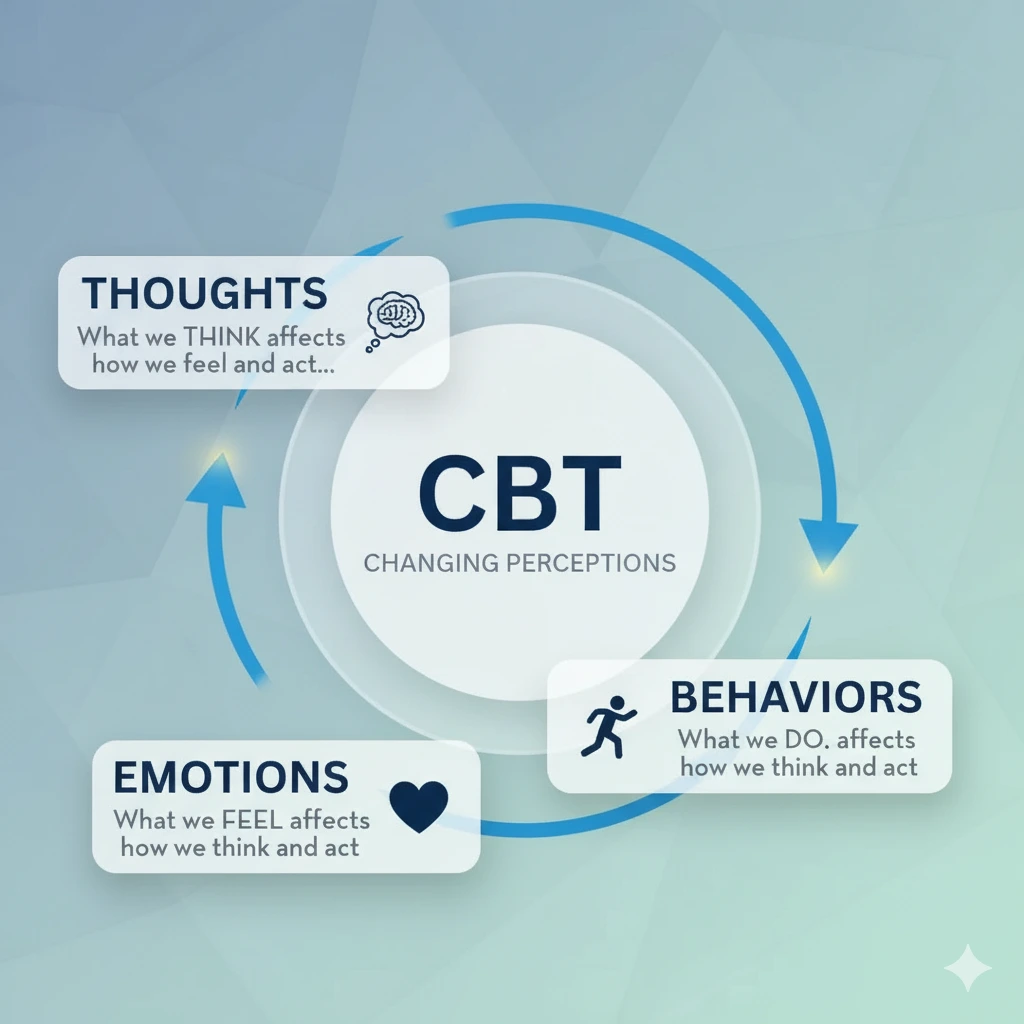
Identifies and changes unhelpful thought patterns to alter emotions and behaviors.
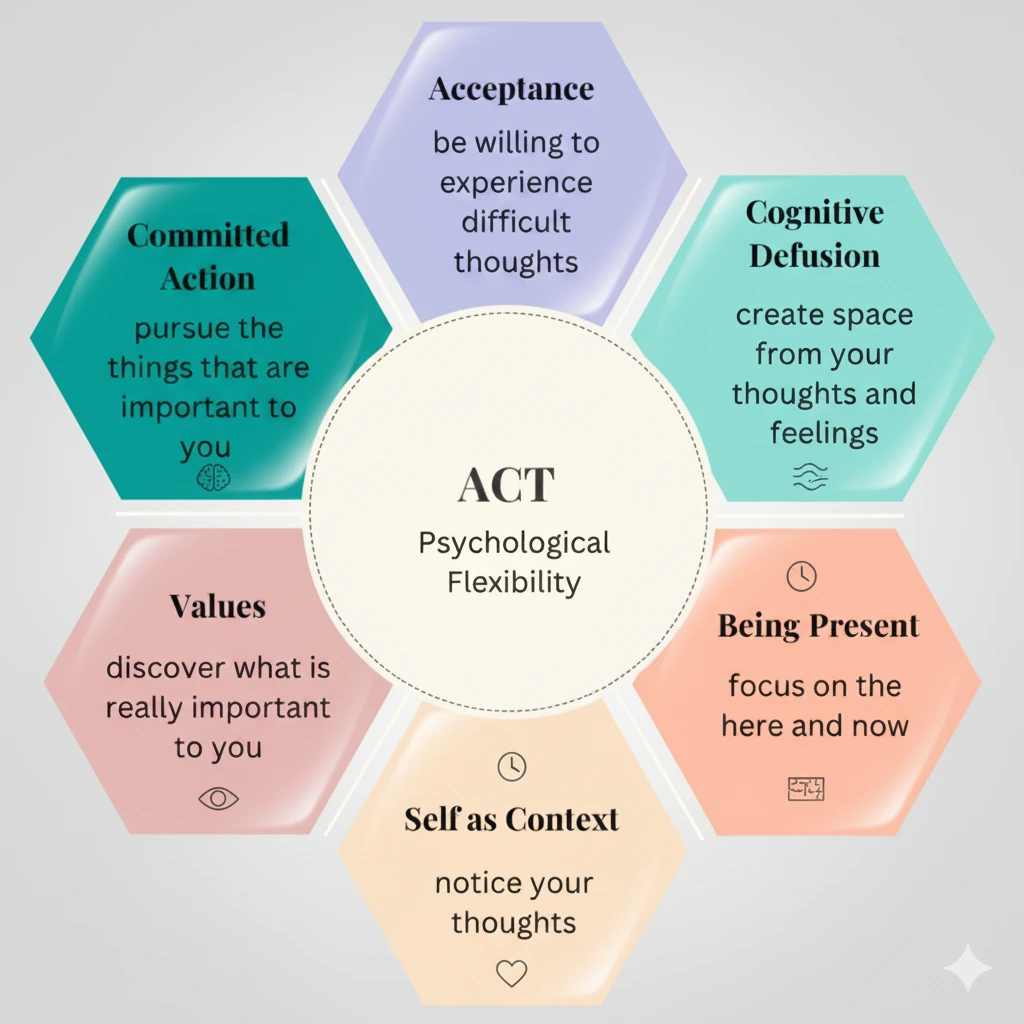
Encourages accepting difficult feelings while committing to actions aligned with personal values
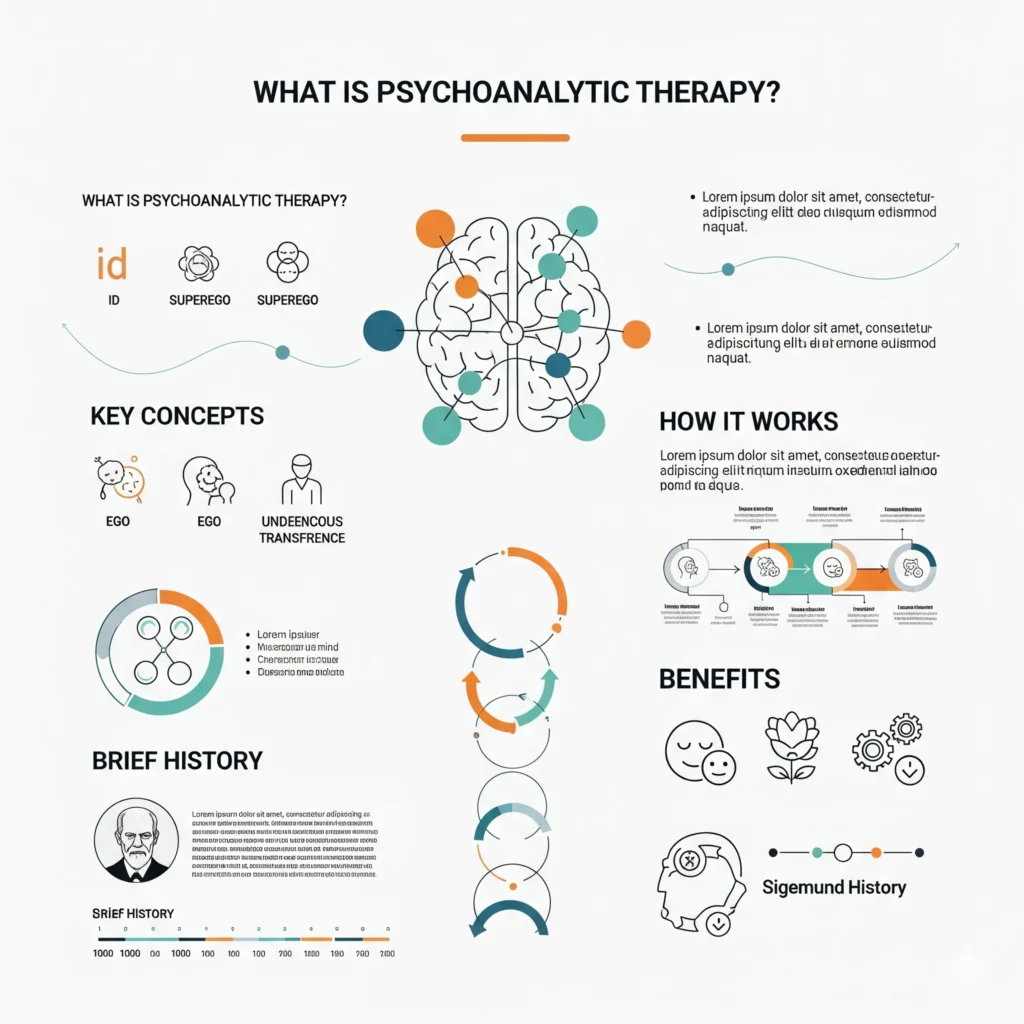
Explores unconscious patterns and past experiences to understand present-day feelings and behaviors.
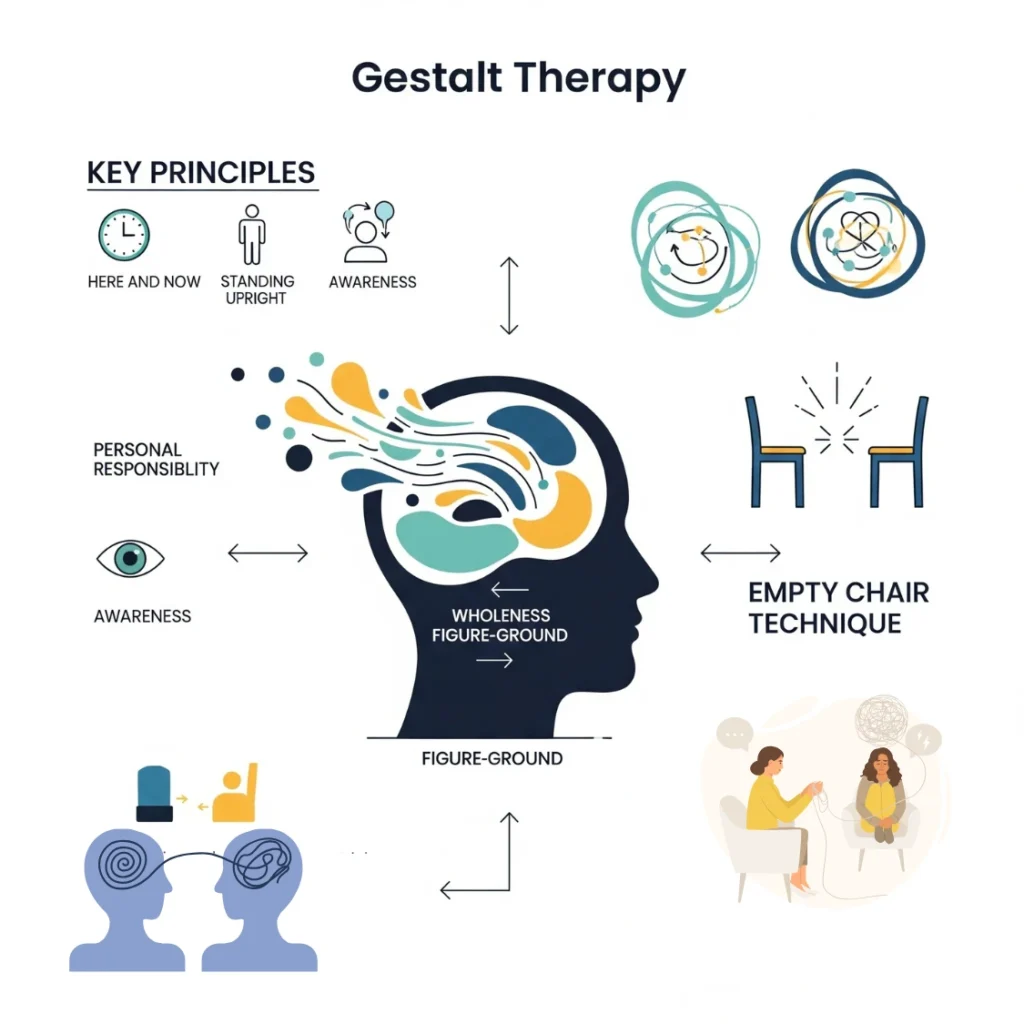
Focuses on self-awareness and processing unresolved issues in the “here and now.”
CBT is a type of psychotherapy that focuses on identifying and changing negative thought patterns and behaviors that contribute to mental health issues. Developed by Aaron Beck and others, CBT is based on the idea that thoughts, feelings, and actions are interconnected, and that by changing one aspect, individuals can improve their overall mental health.
In the context of OCD, CBT helps individuals to:
Challenge intrusive thoughts to reduce their power.
Understand the OCD cycle of thoughts, feelings, and behaviors.
Develop coping strategies to manage anxiety and resist compulsions.
Gradually confront fears to break the cycle of avoidance.
Cognitive Behavioral Therapy for OCD is a structured, evidence-based approach that primarily consists of four core components
This technique helps individuals to identify and challenge negative thoughts and replace them with more balanced and constructive ones.
Encouraging individuals to face situations, objects, thoughts that give anxiety and OCD, while resisting the urge to engage in compulsions.
Teaching individuals techniques to manage anxiety and reduce stress, such as deep breathing, muscle relaxation, and meditation.
Encouraging individuals to practice CBT techniques outside of sessions and monitor their progress to reinforce learning and motivation.
Cognitive Behavioral Therapy is a highly effective treatment approach for OCD, offering individuals a powerful tool for managing symptoms, challenging negative thought patterns, and regaining control over their lives. By combining cognitive restructuring, exposure and response prevention, mindfulness, and relaxation techniques, CBT provides a comprehensive and supportive framework for OCD recovery. If you or someone you know is struggling with OCD, consider seeking out a qualified CBT therapist to start the journey towards healing and recovery.
Need something beyond standard therapy? Ask for a Custom Treatment Plan.
ACT is a type of psychotherapy that emphasizes acceptance of difficult emotions, thoughts, and experiences in the present moment. Developed by Steven Hayes and others, ACT aims to increase psychological flexibility, allowing individuals to live more meaningful and fulfilling lives.
Â
ACT for OCD: A Paradigm Shift
In the context of OCD, ACT diverges from traditional treatments by:
Guides values-based action over symptom reduction.
Teaches acceptance of unwanted thoughts and feelings.
Reduces avoidance of difficult internal experiences.
 Acceptance and Commitment Therapy for OCD is a structured, evidence-based approach that primarily consists of four core components
Encouraging individuals to acknowledge and accept their thoughts, emotions, and experiences in the present moment, without judgment or resistance.
Helping individuals to see their thoughts as mere mental constructs, rather than reflections of reality, reducing their impact and influence.
Cultivating mindfulness and encouraging individuals to develop a sense of self-as-context, observing their experiences without becoming entangled in them.
Guiding individuals to identify and pursue actions aligned with their core values, promoting a sense of purpose and direction.
Acceptance and Commitment Therapy offers a unique and empowering approach to treating OCD. By fostering acceptance, mindfulness, and values-based action, ACT can help individuals with OCD transform their relationship with the disorder and reclaim their lives. As a complementary or alternative treatment, ACT can be a valuable addition to traditional OCD treatments, promoting increased psychological flexibility, reduced symptom interference, and improved overall well-being
Need something beyond standard therapy? Ask for a Custom Treatment Plan.
Psychoanalytic therapy, developed by Sigmund Freud, is a type of talk therapy that focuses on exploring the unconscious mind and its role in shaping thoughts, feelings, and behaviors. This approach emphasizes the importance of childhood experiences, relationships, and trauma in shaping the development of OCD.
Psychoanalytic Understanding of OCD
From a psychoanalytic perspective, OCD is seen as a defense mechanism against unconscious conflicts, anxieties, and desires. The obsessive thoughts and compulsive behaviors are viewed as a way to manage and cope with these unconscious feelings, rather than directly addressing the underlying issues.
 Acceptance and Commitment Therapy for OCD is a structured, evidence-based approach that primarily consists of four core components
The individual is encouraged to speak freely about their thoughts, feelings, and experiences, without censorship or self-editing.
The therapist helps the individual explore the unconscious meanings and symbolism in their dreams.
The therapist helps the individual understand and work through their resistance to exploring unconscious conflicts and anxieties.
Interpretations of the individual’s unconscious conflicts, anxieties, and desires, and how these factors contribute to their OCD symptoms.
Explores unconscious conflicts to understand the deep-rooted origins of OCD symptoms.
Focuses on long-term change by developing a profound understanding of unconscious motivations.
Enhances emotional regulation to better manage the intensity and frequency of OCD-related distress.
Promotes profound self-awareness, leading to greater insight into one’s internal drives and behaviors.
Psychoanalytic therapy offers a unique and in-depth approach to understanding and addressing the unconscious roots of OCD. While it may not be the most widely recognized or empirically supported treatment for OCD, psychoanalytic therapy can provide individuals with a deeper understanding of themselves and their unconscious motivations, leading to long-term benefits and improved emotional regulation. As with any treatment approach, it is essential to work with a qualified and experienced therapist to determine the best course of treatment for OCD.
Need something beyond standard therapy? Ask for a Custom Treatment Plan.
Gestalt therapy is a form of psychotherapy that focuses on the present moment, emphasizing personal responsibility and awareness. Developed by Fritz Perls, Laura Perls, and Paul Goodman, gestalt therapy is a holistic approach that considers the individual’s thoughts, feelings, and behaviors as interconnected and interdependent.
1. Present-moment awareness: Gestalt therapy emphasizes the importance of being fully present in the current moment, rather than dwelling on the past or worrying about the future.
2. Personal responsibility: Individuals are encouraged to take responsibility for their thoughts, feelings, and actions, rather than blaming others or external circumstances.
3. Awareness and acceptance: Gestalt therapy promotes awareness and acceptance of one’s experiences, including thoughts, feelings, and bodily sensations.
4. Field theory: The therapist considers the individual’s environment and relationships as an integral part of the therapeutic process.

 Gestalt Therapy is a structured, evidence-based approach that primarily uses four core techniques
The individual talks to an empty chair, representing a person or aspect of themselves, to explore and express their feelings.
The individual switches between two chairs, representing different aspects of themselves, to explore and integrate conflicting thoughts and feelings.
The therapist helps the individual explore and understand their dreams, using them as a source of insight and personal growth.
The therapist may use various experiential exercises, such as role-playing or creative activities, to promote awareness and personal growth.
Develops present-moment awareness of thoughts, feelings, and behaviors.
Improves relationship skills through authentic communication and boundary setting.
Encourages taking responsibility for one’s own experiences and actions.
Uses a holistic approach that integrates mind, body, and environment.
Gestalt therapy offers a unique and holistic approach to mental health, emphasizing present-moment awareness, personal responsibility, and awareness and acceptance of one’s experiences. By using various techniques and approaches, gestalt therapy can be an effective treatment for a range of mental health issues, including anxiety, depression, trauma, and relationship issues.
Need something beyond standard therapy? Ask for a Custom Treatment Plan.
Still have questions about therapy or treatment?
Our psychologists are here to listen and guide you. Book a consultation today and take your first step forward.
Therapy is a safe, supportive space to explore emotions, challenges, and goals with a lets si trained professional to improve mental well-being.
Yes, online therapy is equally effective, secure, and convenient—offering the same support as face-to-face sessions.
We specialize in anxiety, depression, OCD, stress, trauma, relationships, adolescent issues, addiction, and more.
We guide you based on your concerns and connect you with a therapist whose expertise best matches your needs.
You can book online through our website or connect directly via WhatsApp.